A defensive identity defined Iran’s World Cup campaign
TEHRAN – Iran’s World Cup campaign has so far been defined not by attacking flair or possession football, but by discipline, organization and defensive resilience.
After a 1-1 draw with Egypt in their final Group G match, Team Melli finished third in the group and must now wait for results elsewhere to determine whether they will advance as one of the tournament’s best third-placed teams. Regardless of their fate, one thing has become clear: Iran have built their campaign around defending first and attacking only when opportunities arise.
The approach was evident from the opening match against New Zealand. Iran failed to impose themselves despite facing the lowest-ranked side in the group, settling for a draw after producing only brief moments of attacking quality. Instead of pressing high or controlling possession, Iran preferred to sit deep, remain compact and rely on quick transitions. While the strategy avoided defeat, it also left the team chasing points later in the tournament.
The same conservative philosophy was on display against Belgium. Facing one of Europe’s strongest squads, Iran adopted an even deeper defensive block. The back line stayed compact, the midfield worked tirelessly to close passing lanes, and Belgium found it difficult to create clear-cut opportunities. The result was a goalless draw that represented one of Iran’s finest defensive performances in recent years. However, the match also highlighted the team’s biggest weakness. Iran rarely threatened in attack and finished the contest with few genuine scoring chances, appearing satisfied with a point rather than pursuing victory.
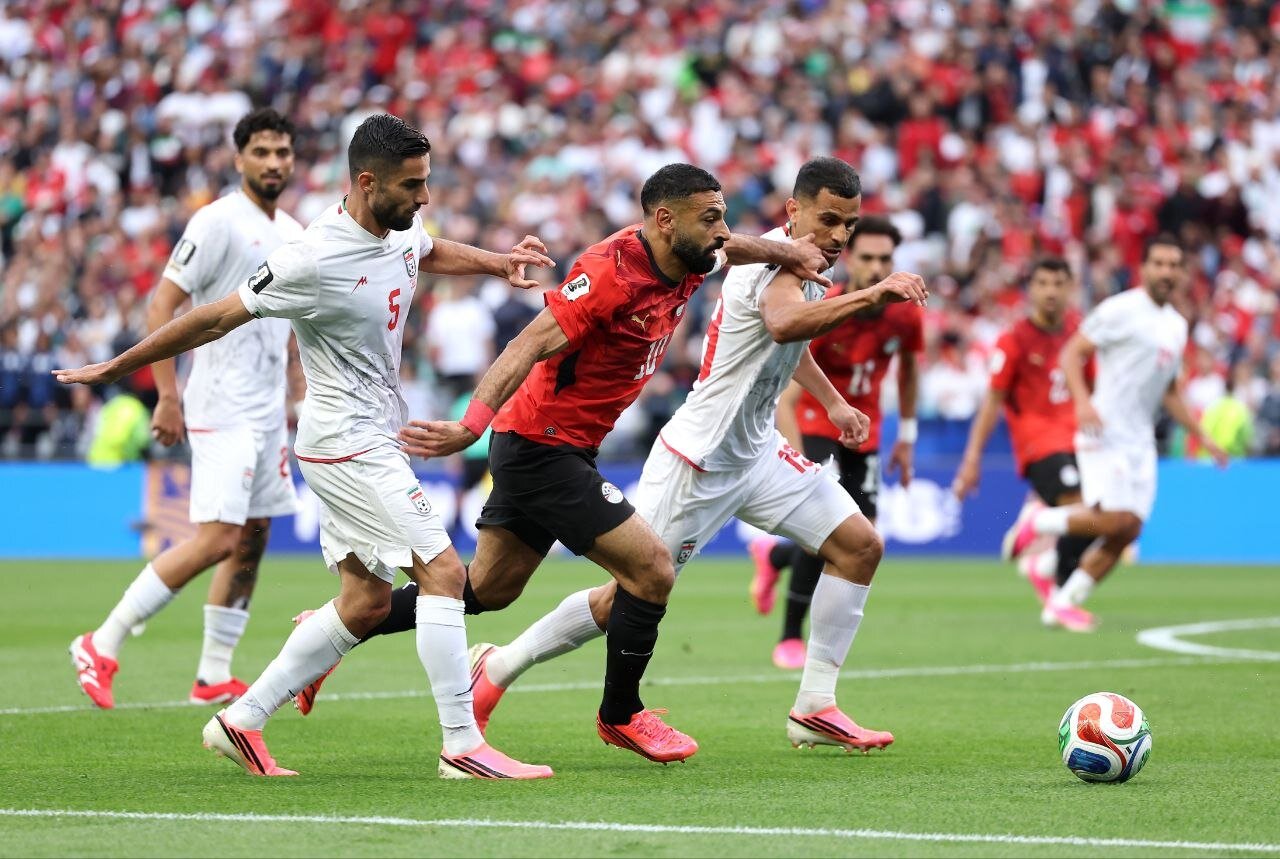
Against Egypt, Iran needed three points to maximize their chances of direct qualification, but the tactical blueprint barely changed. Team Melli defended with numbers behind the ball, looked to capitalize on set pieces and counterattacks, and struggled to sustain possession in the final third. Even after falling behind, Iran continued to play cautiously instead of committing more players forward. Their late equalizer kept qualification hopes alive, while a stoppage-time winner was ruled out for a marginal offside after a VAR review, leaving the match level at 1-1.
Throughout the group stage, Iran demonstrated admirable defensive discipline. The defenders remained well organized, the midfield consistently tracked runners, and the team conceded relatively few clear opportunities despite facing technically superior opponents. Such structure reflected a coaching philosophy centered on minimizing mistakes rather than taking risks.
Yet the tournament also exposed Iran’s limitations in possession. The team often struggled to build attacks through midfield, leaving the forwards isolated. Transitions were slow, overlapping runs from full-backs were limited, and creative passing around the penalty area was infrequent. Too often, attacks ended with hopeful long balls or crosses that were comfortably dealt with by opposing defenses.
The numbers tell the story. Iran earned draws against New Zealand, Belgium and Egypt, remaining unbeaten but winning none of their matches. The team collected three points through consistency rather than ambition, relying on defensive solidity instead of offensive production.
Whether Iran advances or not, this World Cup campaign will likely be remembered as one built on defensive organization. Iran proved they could frustrate stronger opponents and remain difficult to break down. However, modern international football increasingly rewards teams capable of balancing defensive discipline with attacking intent. If Iran hopes to make a deeper run in future tournaments, adding greater creativity and attacking conviction to its well-established defensive identity will be the next challenge.
VatanSport.